



Every year, without fail, I get parents reaching out before they enrol their child. Some have already tried one or two other centres. Some are starting from scratch. But almost all of them ask a version of the same question:
"Teacher Augustine, how do we know we're making the right choice?"
And I think that question deserves a proper, honest answer - a genuine look at what actually separates a good English tuition centre for primary students that moves your child forward from one that simply fills two hours of their Saturday with worksheets.
I've been teaching primary English for over 20 years. I've seen students arrive having spent months at other centres with very little to show for it. I've also had parents tell me they wish they'd known what to look for earlier, before the wasted months and the money spent with nothing to show for it.
So this article is for those parents. And for you, if you're currently in the middle of that search.
Key Takeaways
- Don’t rely on branding. Ask if your child will be taught consistently by an experienced tutor who understands PSLE requirements. Frequent tutor changes can disrupt learning and slow progress.
- A good class should involve students thinking, speaking, and participating. During a trial, check if students are engaged, as this is a strong sign that real learning is happening.
- Tuition should focus on skills like comprehension techniques, writing structure, and oral practice. Ask how each PSLE paper is taught to ensure the approach is clear and relevant.
The Question Most Parents Are Actually Asking
When parents ask how to choose a good primary English tuition centre, what they're really asking is how to avoid wasting time and money on something that doesn’t actually help their child.
English is not just one component of your child's education, but is the foundation for almost everything else. It is the language of instruction for Science, Social Studies, and even Maths problem sums. A child who struggles to read a comprehension passage carefully doesn't just lose marks in English, but they might also struggle in other subjects.
What I've observed over 20 years of teaching primary students is that most of them share very similar struggles.
- They find it hard to construct sentences correctly under exam pressure.
- They can read a passage but cannot answer the question precisely because they're not sure what's actually being asked.
- Their compositions have ideas but no structure.
- In oral exams, they freeze because nobody has taught them how to organise their thoughts on their feet.
These are not problems that sort themselves out with time. They need to be addressed systematically, with the right guidance. So here's what I'd look for when evaluating where that guidance will come from.
Who is Actually Teaching Your Child?
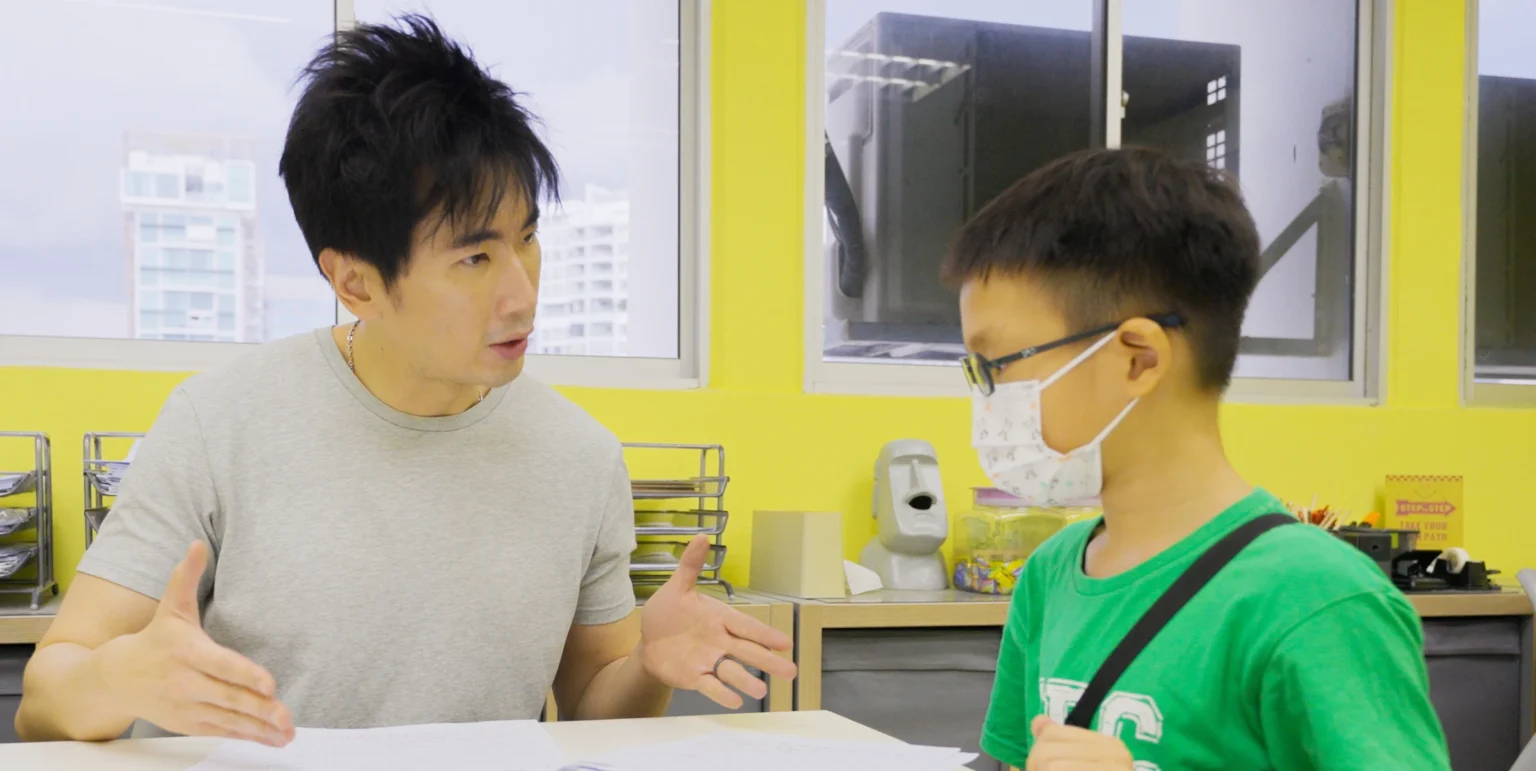
It's easy to be impressed by a centre's branding, website, or awards. What matters far more is who will be standing in front of your child every single week.
At Augustine's English Classes, every class at every level is personally conducted by me, Teacher Augustine. Every lesson, every week, every class. That's a deliberate choice, and it matters because consistency in teaching produces consistency in results.
When evaluating any centre, ask specifically:
- Who teaches the class? Is it the principal tutor or a permanently employed teacher, or is there regular turnover? Frequent changes in tutors mean your child is constantly re-adjusting to a new face and a new style.
- What is their background? A tutor who understands the marking requirements for comprehension open-ended questions, the structure of situational writing, and what examiners actually look for in a composition is a very different teacher from one who simply has a degree in English.
- Can they adapt? The student who needs help with grammar requires a different approach from the student who writes well but struggles with comprehension. Good tutors notice the difference and teach accordingly.
Is Learning a Spectator Sport in That Classroom?
I've built my entire teaching philosophy around one belief that learning is not a spectator sport.
Students do not improve by sitting quietly while a teacher talks at them. They improve by actively participating, by thinking, attempting, discussing, making mistakes, and trying again.
This is one of the first things I'd notice at a trial class at any centre. A good primary English tuition class should involve:
Active Participation, Not Passive Listening
At Augustine's, students don't just receive information. I encourage them to contribute to the lesson. They analyse passages together, explain concepts to their classmates, and work through problems instead of waiting to be told the answer.
This is what I mean when I say I focus on the shift from passive to active learning. How can you confirm that learning has occurred? When a student can effectively teach it to someone else.
Pair Work And Collaborative Activities
English is a language, and languages are learned through use. Lessons that incorporate structured pair activities build confidence in expressing ideas, which pays off enormously when it comes to the oral examination.
An Environment Where Questions Feel Safe
Many primary students don't ask questions in school because they're embarrassed.
A small class size means students are known individually, their specific struggles are visible, and there is no reason to hide at the back of the room.
That’s why, at Augustine's, I’ve decided to cap every class at 8 students so I can easily reach them during our class.
When you attend a trial class, pay attention also to the room. Are students leaning in or zoning out? Are they being asked to think, or just to copy? That tells you more than any brochure will.
Lastly, review parent and student testimonials to get an honest picture of the centre’s real impact.
Does the Curriculum Go Beyond the Textbook?
A common misconception is that tuition should simply reteach what the school has already covered. If that's all a centre is doing, your child is sitting through the same lesson twice, which is both inefficient and, frankly, demoralising for a child who already finds the subject difficult.
What a good English tuition for primary does is fill the specific gaps that classroom instruction, with its larger class sizes and broader objectives, doesn't always have time to address.
At Augustine's, I regularly analyse current PSLE question trends and exam structures so that the materials are directly relevant to what students will face.
The curriculum is updated to reflect the latest syllabus requirements, including the 2026 PSLE English changes, because teaching from outdated materials is a disservice to every student in the room.
For primary students, a strong curriculum should cover all four papers:
- Paper 1 — Writing: Students need to learn more than grammar rules. They need to understand why certain vocabulary choices are more effective, how to structure a narrative that holds together, and how to approach situational writing with a clear grasp of Purpose, Audience, Context, and Culture.
- Paper 2 — Language Use and Comprehension: Comprehension is not about finding a sentence in the passage. It’s about responding precisely to what the question requires. I teach students to annotate passages deliberately and to break down question types so they know exactly what kind of response is expected.
- Paper 3 — Listening Comprehension: Often underprepared for, this paper rewards students who've been trained in answer elimination and attentive listening. It doesn't improve on its own. My post on active listening skills covers some of the techniques I use with students to develop this skill.
- Paper 4 — Oral Communication: Pronunciation, fluency, and the ability to express a personal opinion clearly on a stimulus passage are skills that need to be practised out loud, regularly, in a setting where making mistakes is part of the process.
Ask any centre how each of these papers is addressed. If the answer is vague, keep asking.
How Will You Know If Your Child Is Improving?
"My child has been going for almost a year, and I genuinely don't know if it's making a difference."
Progress in English can feel gradual, but it should still be visible and communicated clearly.
A good tuition centre keeps parents informed through regular updates rather than a report card at the end of the term.
For example, I provide periodic progress updates to parents so that they understand what their child is currently working on, where they're making gains, and what still needs attention. I call this open communication, so parents don’t have to guess whether your investment is working.
Beyond formal updates, look for centres that:
- Give specific, written feedback on compositions. Specific feedback on word choice, on structure, on what the question actually required is what produces real improvement over time.
- Track progress in a way that's visible to parents. A student who joins at the AL5 level and leaves the year at AL3 has made real progress. Can the centre show you what that kind of improvement looks like?
Does It Fit Your Family's Life?
Teaching quality matters most, but a tuition commitment that's genuinely difficult to maintain will eventually fall apart. These are the practical things worth confirming before you commit:
Class Schedule
Is there a slot that realistically fits into your weekly routine? Working parents need morning or afternoon options across weekdays and weekends. A schedule that only works when nothing else in your family's life demands attention will quickly become a source of stress.
What's Actually Included In The Fees
At Augustine's, all learning materials, such as worksheets, practice papers, and revision guides, are included in the term fees. No registration fee. No monthly material charges. No deposit. What you see is what you pay. Many centres don't operate this way, and the add-ons accumulate quickly across a full year, so always check beforehand.
Make-Up Arrangements
Children get ill. School events clash. Does the centre accommodate missed lessons? At Augustine's, students who miss a class can attend another session that week, subject to availability. That means a missed lesson isn't simply a lesson you've already paid for and lost.
Trial Class
Every reputable centre should offer one. At Augustine's, I offer a complimentary trial lesson for all new students where your child sits alongside real students. This is the most honest way to assess fit. How does your child respond to the teaching style? Do they leave the class feeling engaged or overwhelmed? That one lesson will tell you more than any website can.
Want to book a free lesson with me? Please fill out the form here.
Frequently Asked Questions
How do I know if my child needs extra English tuition?
Look for patterns rather than isolated incidents, such as recurring grammar errors that don't improve despite practice, comprehension scores that plateau, compositions that have ideas but fall apart structurally, and growing reluctance or anxiety around the oral examination. If your child has quietly decided that English "isn't for them," that's also a sign worth taking seriously.
How does tuition actually help with PSLE English?
Effective tuition addresses each component of the PSLE directly with targeted strategies for each paper, not generic advice. For comprehension, that means teaching students how to break down question types, not just locate the relevant sentence. For composition, it means specific writing techniques and structure, not just "be more descriptive." For oral, it means regular practice under exam-like conditions so the real thing doesn't feel like the first time.
What class size is realistic for effective English tuition?
Anything above 10 students makes it very difficult for a teacher to give meaningful individual attention in a two-hour lesson. At Augustine's, all classes are capped at 8 students. This directly affects whether a tutor can observe each student's thinking process, catch errors as they occur, and give specific rather than generic feedback.
One More Thing Before You Enrol in a Good English Tuition for Primary
After everything above, let me tell you that no good tuition centre can guarantee results.
What a good centre can do is create the right conditions for genuine improvement through consistent, expert teaching, a curriculum that addresses real gaps, and a learning environment where active participation is the norm rather than the exception.
If your child is currently in primary school and English is a concern, whether it's grammar, comprehension, composition, oral, or simply a loss of confidence in the subject, the earlier it's addressed systematically, the better. English challenges don't tend to resolve on their own, and the PSLE has a way of arriving faster than anyone expects.
If you'd like to see firsthand what our lessons look like, I'd encourage you to come for a trial class. No pressure, no obligation. Let's see whether our approach is the right fit for your child.
Book a complimentary trial class at Augustine’s English Class today.
