




Complete the form below so we can contact you directly today.

Turning Inconsistent English Grades into Strong Results
Structured English tuition for Primary, Secondary and JC students. Classes capped at 8 and personally taught by Teacher Augustine — 1,800+ students coached since 2004.
“Finally! A programme that improves grades and my child's attitude toward learning.” - Mrs Wong

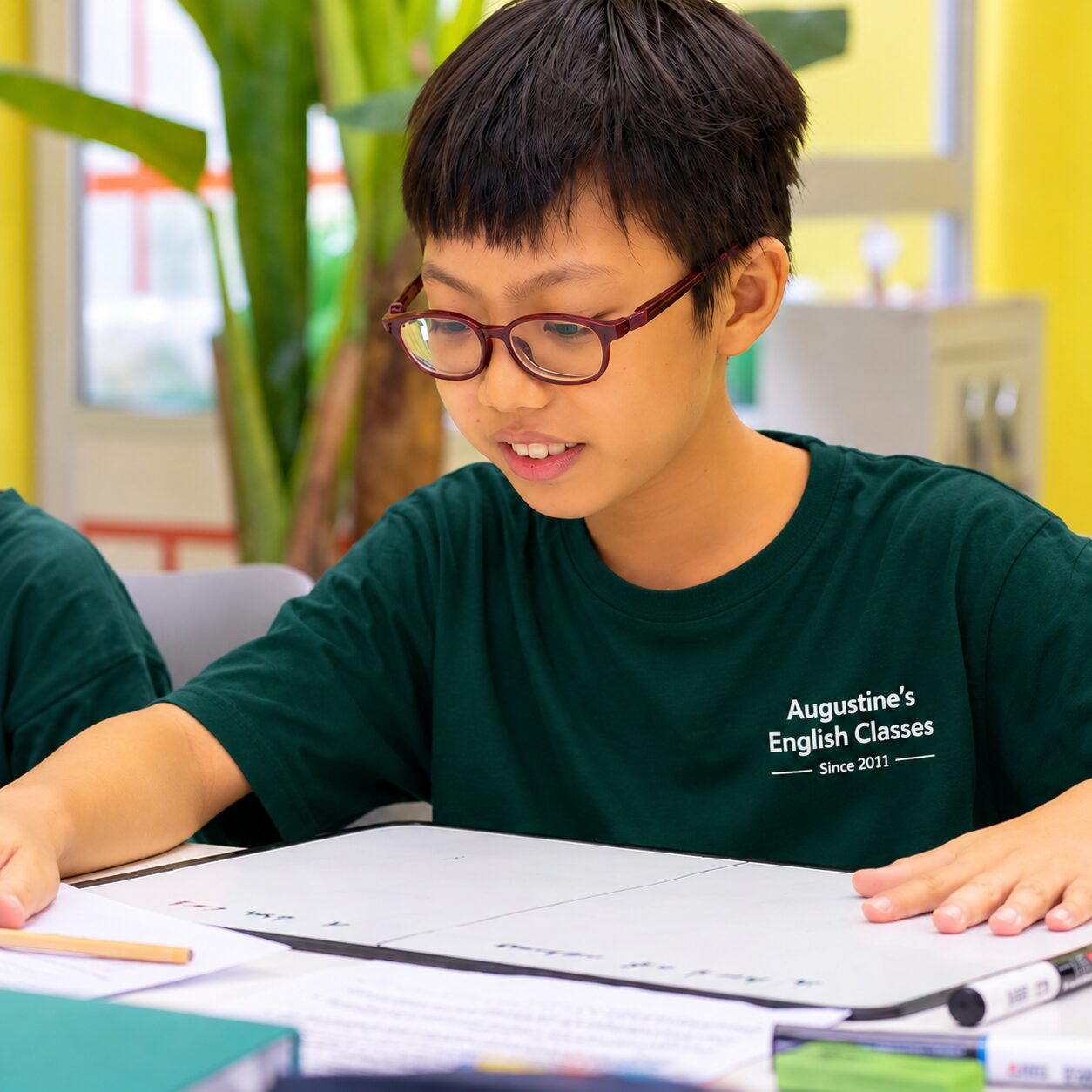
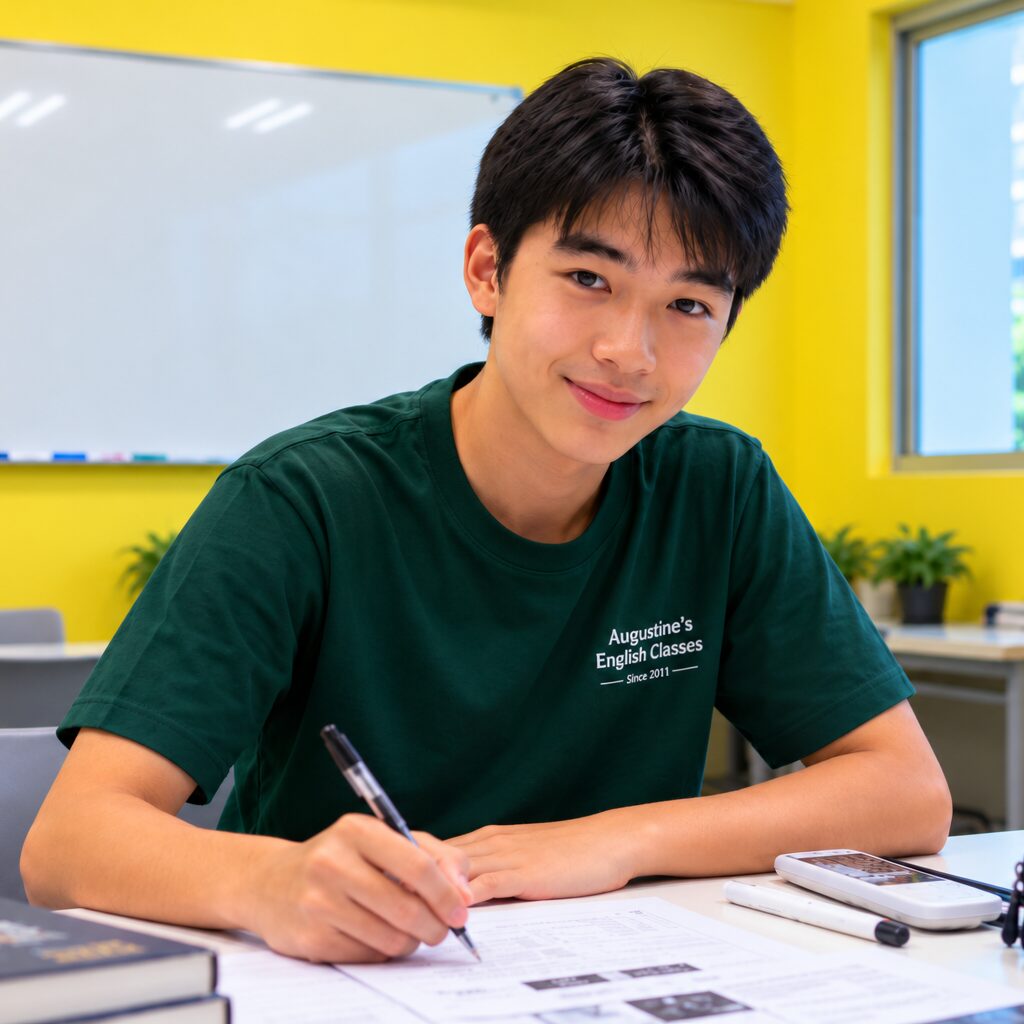
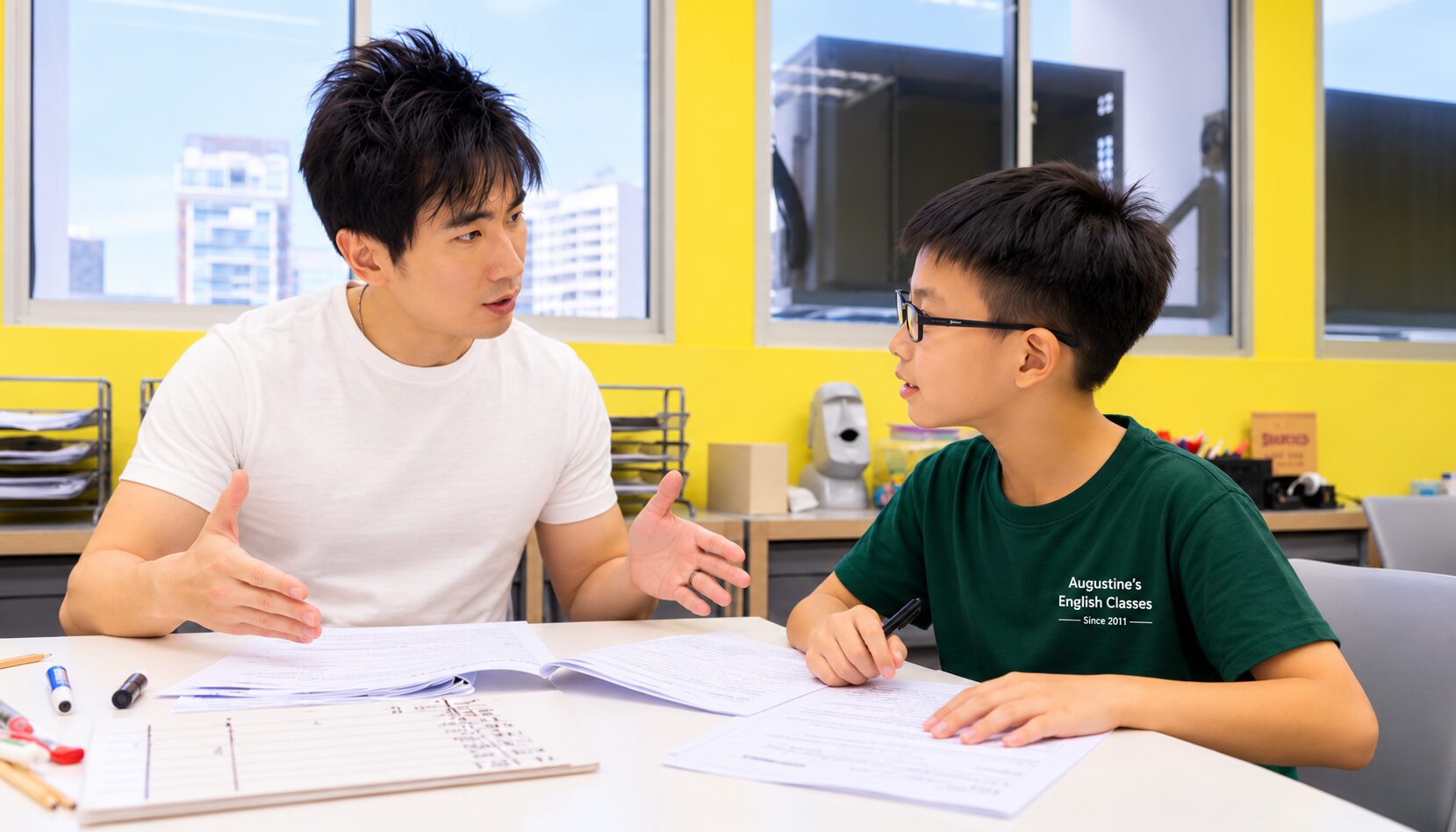
English Tuition Centre in Singapore for PSLE, O-Level and JC
Most students who struggle with English do not lack ability. They lack a clear method. I founded Augustine's English Classes in 2004 to address exactly this — an English tuition centre in Singapore where every lesson is built around fixed frameworks for comprehension answering, composition writing, and exam technique. The aim is direct: train students to recognise question types, apply the correct structure, and stop losing marks to vague or unstructured answers.


English Tuition Programmes for Every Level
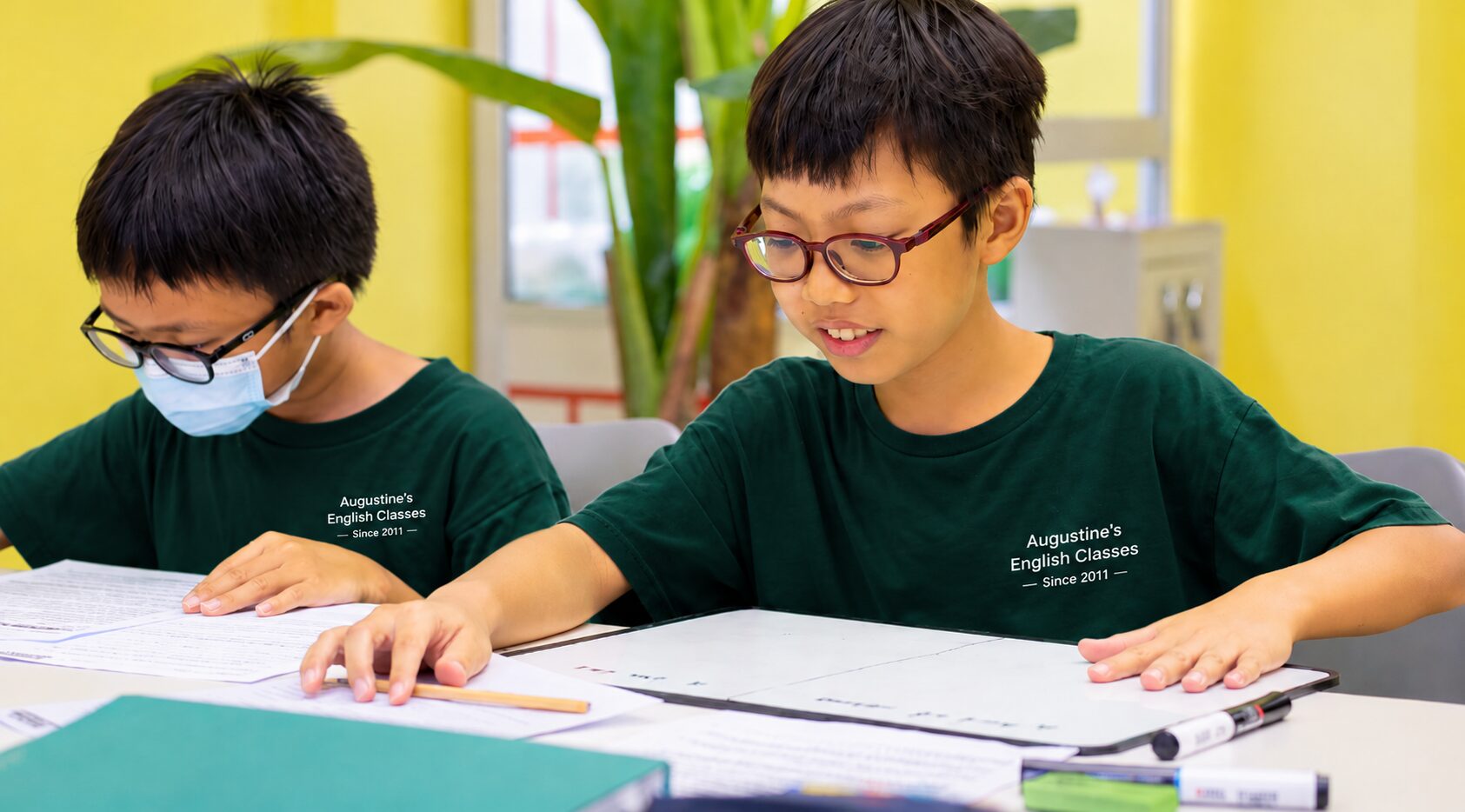
Our Programme
Primary English Tuition
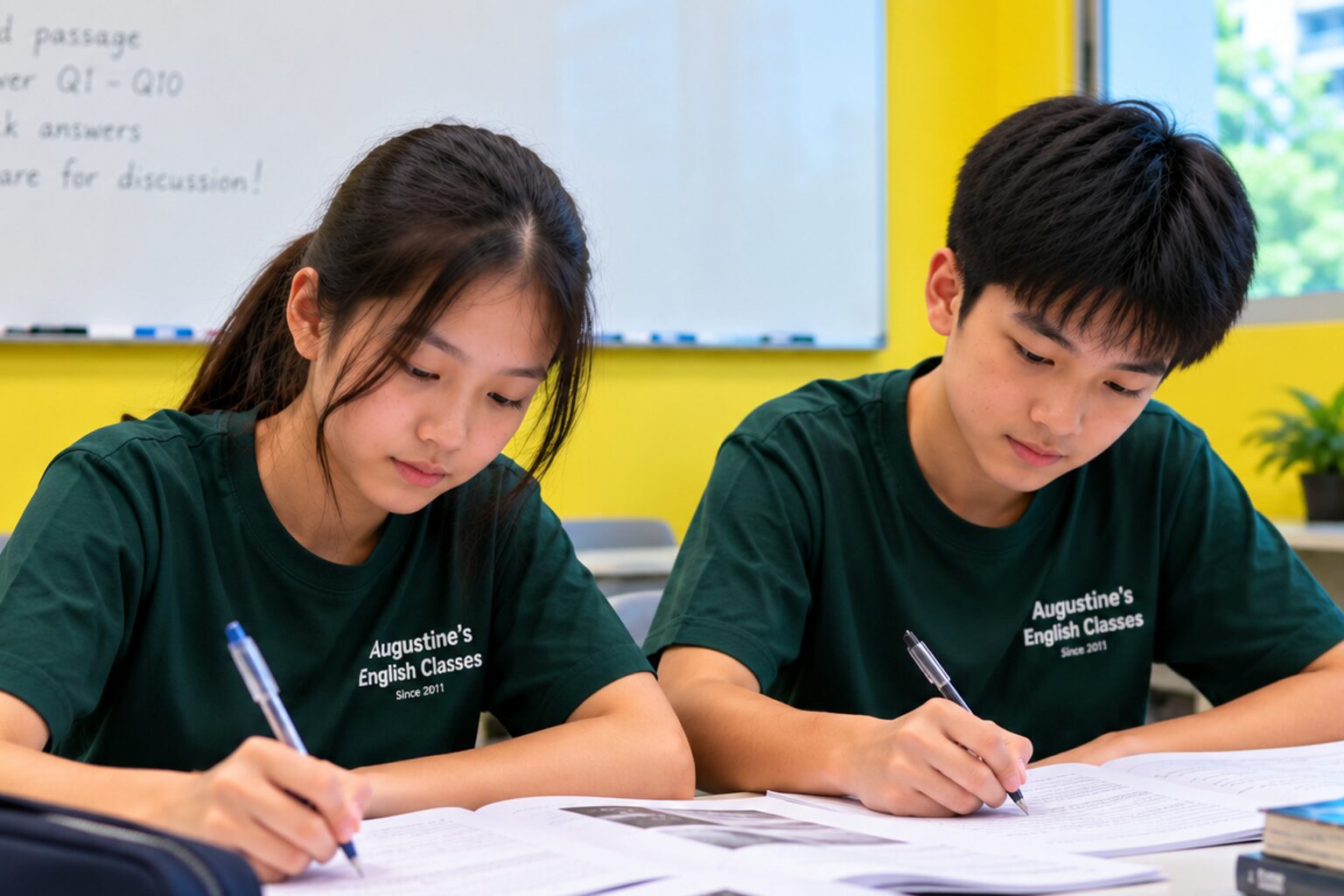
We train Primary 3–6 students to apply structured techniques across Paper 1 and Paper 2.
- Fixed frameworks for situational and continuous writing
- Step-by-step methods for the eight main comprehension question types
- Targeted training for synthesis, transformation and grammar marks
- Oral practice covering reading and stimulus-based conversation
Our Programme
Secondary English Tuition
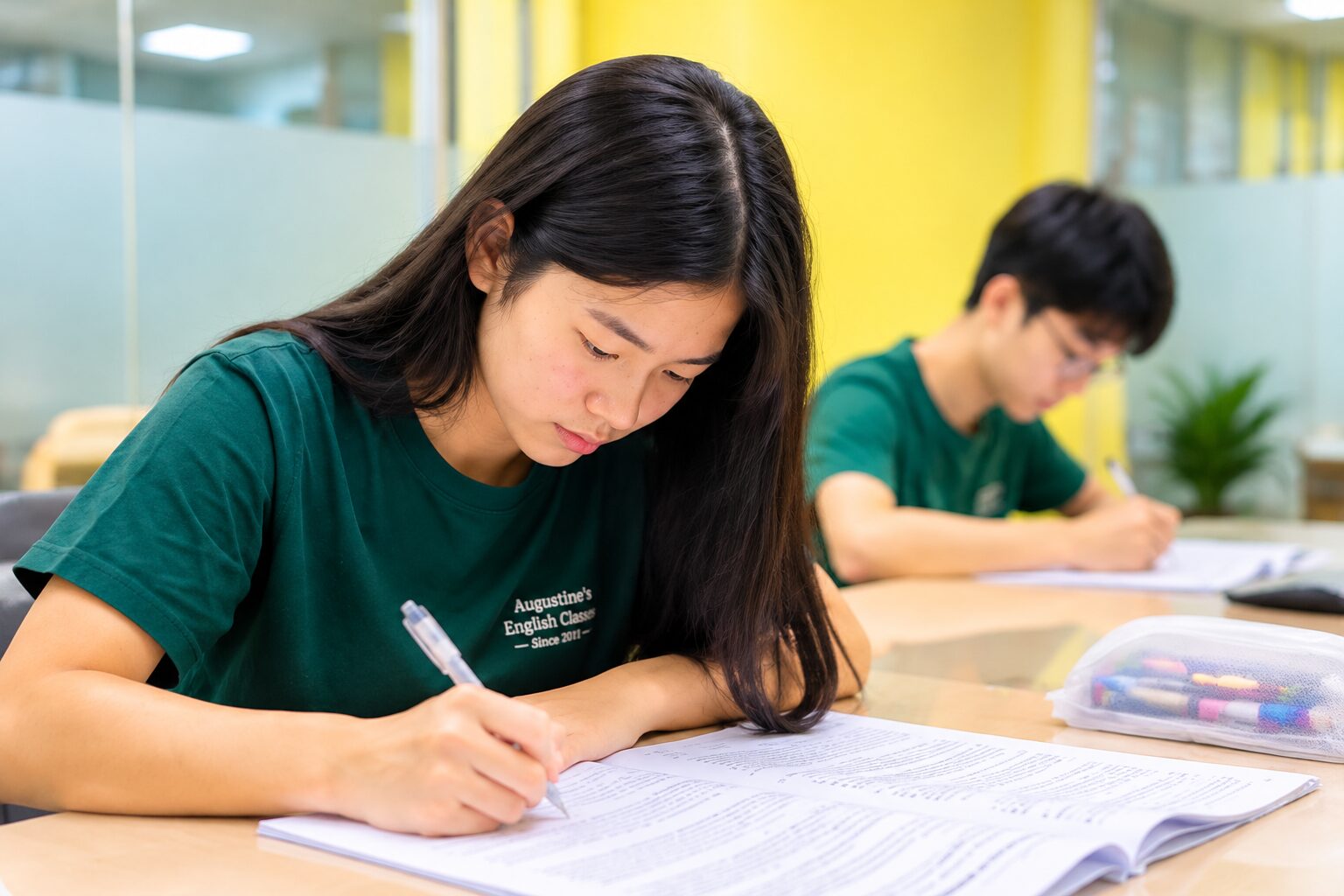
We train Secondary 1–4 students in O-Level English answering technique and structure.
- Composition frameworks for narrative, descriptive, expository and argumentative writing
- Situational writing formats with attention to purpose, audience and tone
- Comprehension answering techniques across all eight main question types
- Summary writing methods that secure both content and language marks
Our Programme
Junior College GP / IP Yr 5 & 6
We train JC1–JC2 and IP Year 5–6 students for the General Paper examination.
- Argument construction frameworks for essay writing
- Comprehension techniques for inference, application and evaluation questions
- Coverage of recurring GP themes, including science, ethics, media and global affairs
- Exam-day strategies for time management and marks distribution

Ready to kickstart your child’s journey to success?
Our teaching philosophy

Love of learning

Active learning

Student strategies

Critical thinking

Quality teachers
and, in case you're not familiar
Why Choose Our English Tuition Centre?

From Challenge to Confidence
Many students in Singapore struggle with English and gradually stop aiming for an ‘A’ when weak answers and repeated mistakes are left uncorrected. At our English Tuition Centre, we address this directly — every composition is marked against the actual exam rubric, every comprehension answer is reviewed for the specific reason it lost marks, and students are trained until the corrections become habit. Confidence returns when progress becomes measurable.
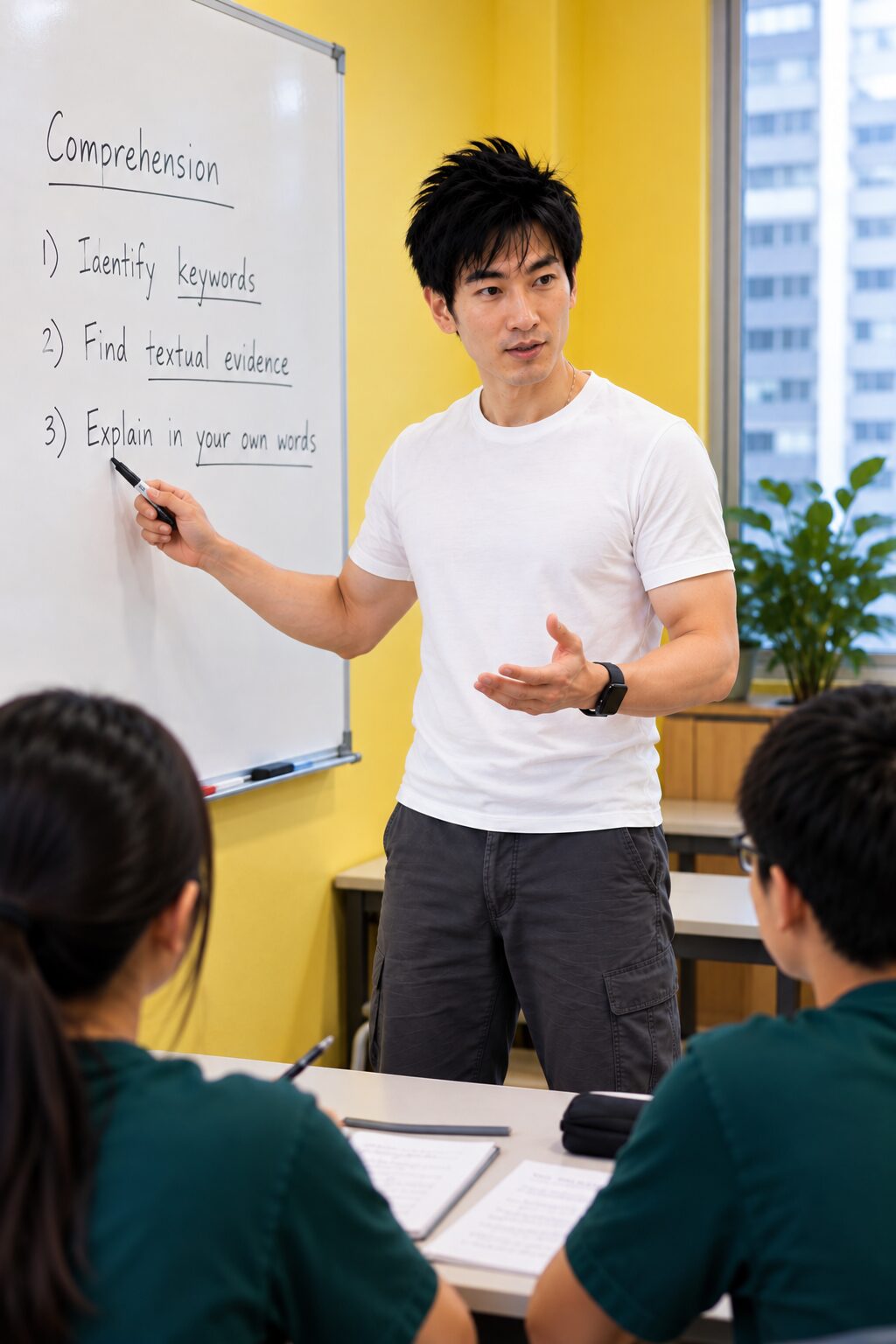
Augustine’s English Classes is a registered school with Singapore’s Ministry of Education (MOE). What sets our English tuition apart is straightforward: Teacher Augustine personally teaches every class. There are no rotating tutors, so he can track each student's recurring mistakes across the year and correct them directly. Classes are capped at around 8 students, which means every child receives immediate correction on writing errors and specific feedback on comprehension answers, not just ticks and crosses. Lessons are built around structured frameworks for composition writing, comprehension answering and exam technique, the areas where students most consistently lose marks in PSLE, O-Level and A-Level papers. The result, since 2004, is more than 1,800 students coached and a clear pattern of grade improvement. Click the video to see how a typical lesson is structured.
Augustine’s English Classes is a registered school with Singapore’s Ministry of Education (MOE). What sets our English tuition apart is straightforward: Teacher Augustine personally teaches every class. There are no rotating tutors, so he can track each student's recurring mistakes across the year and correct them directly. Classes are capped at around 8 students, which means every child receives immediate correction on writing errors and specific feedback on comprehension answers, not just ticks and crosses. Lessons are built around structured frameworks for composition writing, comprehension answering and exam technique, the areas where students most consistently lose marks in PSLE, O-Level and A-Level papers. The result, since 2004, is more than 1,800 students coached and a clear pattern of grade improvement. Click the video to see how a typical lesson is structured.
What Parents & Students Say About Our English Classes
Google Reviews from Satisfied Parents
As featured on:



Active Learning Activities at Our English Tuition Centre


Peer Review
Our students mark each other's compositions using the actual examination rubric. This trains them to recognise the difference between content marks and language marks, and to spot the same errors in their own work.

Real Data Problem Solving Techniques
Comprehension and composition tasks built around current global and local events. Students also learn to critically evaluate AI-generated content against examination mark schemes, rather than accept AI answers at face value.

Game-Based Learning
Class-wide question challenges where students compete to apply specific answering techniques under time pressure. Encourages whole-class participation while reinforcing exam discipline.

Just In Time Teaching
Our students complete assigned work before class, so lesson time is spent identifying and correcting errors, rather than introducing material from scratch.

Think, Pair, Share
Our students attempt comprehension answers individually, then compare reasoning with a partner before discussing as a class. This exposes the difference between a partially correct answer and a full-mark answer.
Easy Registration for Our English Tuition Programme


We’ll contact you to review your child’s learning needs properly.

We’ll place you in the suitable programme for your trial lesson.
Frequently Asked Questions
Three factors matter most: class size, instructor consistency, and method clarity. Class sizes above 12 limit the time a tutor can spend on each student's specific errors. Rotating tutors prevents any one teacher from tracking a student's recurring mistakes across the year. And without a defined method for comprehension, answering and composition structure, lessons reduce to worksheet completion. Parents should ask any tuition centre to explain — in concrete terms — exactly how a student is taught to approach each question type.
Most weaker students struggle because no one has shown them why an answer is losing marks. In class, this is corrected through step-by-step guidance, repeated practice using the correct structure, and direct feedback on recurring errors. As students begin to understand how to answer with greater accuracy and clarity, confidence improves because progress becomes measurable for the first time.
In a school class of 30 to 40, weaker students often complete worksheets without ever being shown why their answers are losing marks. At twelve or more, a tutor cannot meaningfully review each composition and comprehension paper in detail during the lesson. At around eight, every student's writing can be checked in class, errors corrected immediately, and the same recurring mistakes addressed before they become habit. The cap is set deliberately, not by accident.
Students are not discouraged from using AI tools — these are now part of how children learn. They are, however, trained to critically evaluate AI-generated answers rather than accept them. In class, students compare AI responses against examination mark schemes to identify what AI gets right, where it falls short, and how to construct a stronger answer themselves. This trains the same critical reading and writing judgement the exams reward.
Yes. Classes are intentionally kept small, usually at around 8 students. This allows each student’s writing and comprehension work to be checked more closely in class. It also allows mistakes to be corrected immediately, instead of being overlooked in a large-group setting where weaker students can fall behind.
Recent outcomes include 86% of Primary 6 students scoring AL1–AL3 for PSLE English, 82% of students improving by at least 2 grades within 6 to 9 months, and multiple students progressing from C/D grades to A1/A2 distinctions at O-Level. Detailed case studies are documented on our results page.
Most students show measurable improvement within 6 to 9 months, provided they apply the techniques taught in class consistently. The fastest gains tend to be in comprehension accuracy and composition structure — areas where a fixed method produces immediate, visible changes in how students answer. Improvement timelines vary depending on starting grade, attendance frequency, and consistency in completing assigned work.
We offer programmes for Primary 3–6 (PSLE preparation), Secondary 1–4 (O-Level English), and JC1, JC2 and IP Year 5–6 (General Paper). Primary students are trained in core Paper 1 and Paper 2 skills. Secondary students focus on composition frameworks, situational writing, comprehension and summary technique. JC and IP students work on argument construction, inference, and analysis for the GP examination.
Yes. Parents can register for a complimentary trial class, conducted within a regular lesson rather than as a separate demo. This allows the student to experience the actual teaching method and class structure, and allows us to assess current level and recommend the most suitable programme.
Would You Like Your Child To Be Our Next Success Story?
Fill in your details, and we’ll contact you to confirm your FREE trial class!