


Complete the form below so we can contact you directly today.
Secondary 1 English Tuition in Singapore
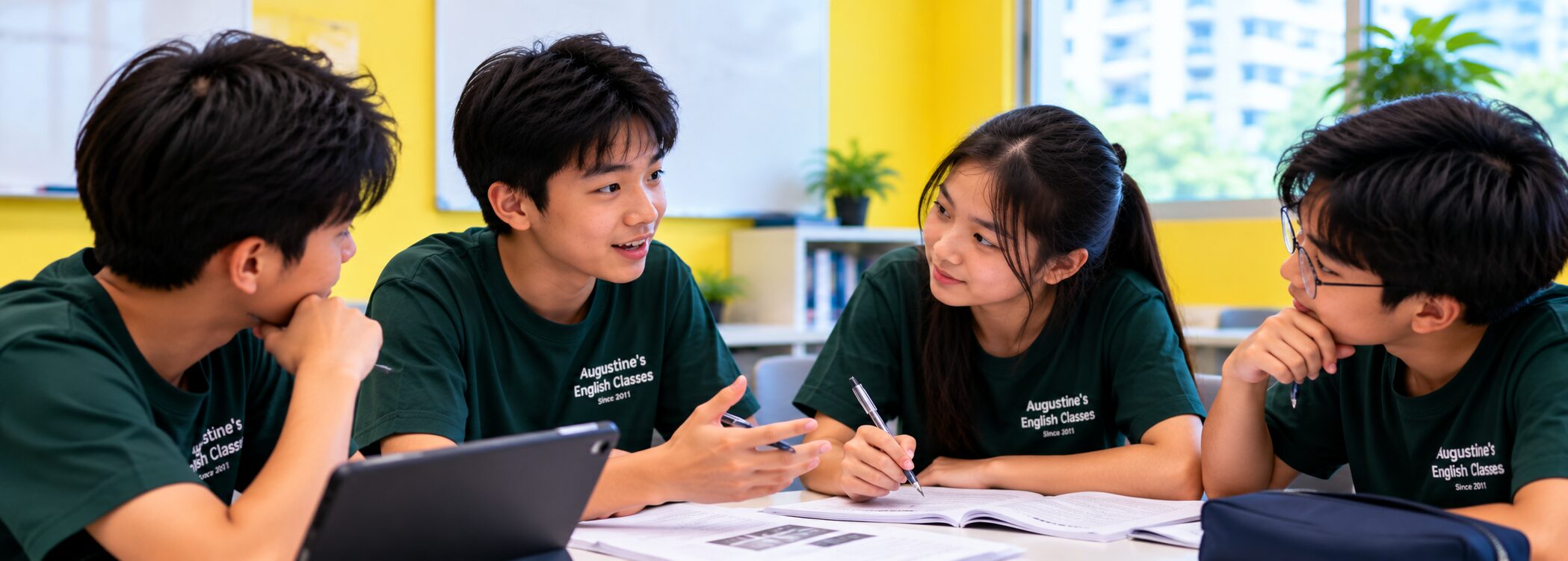

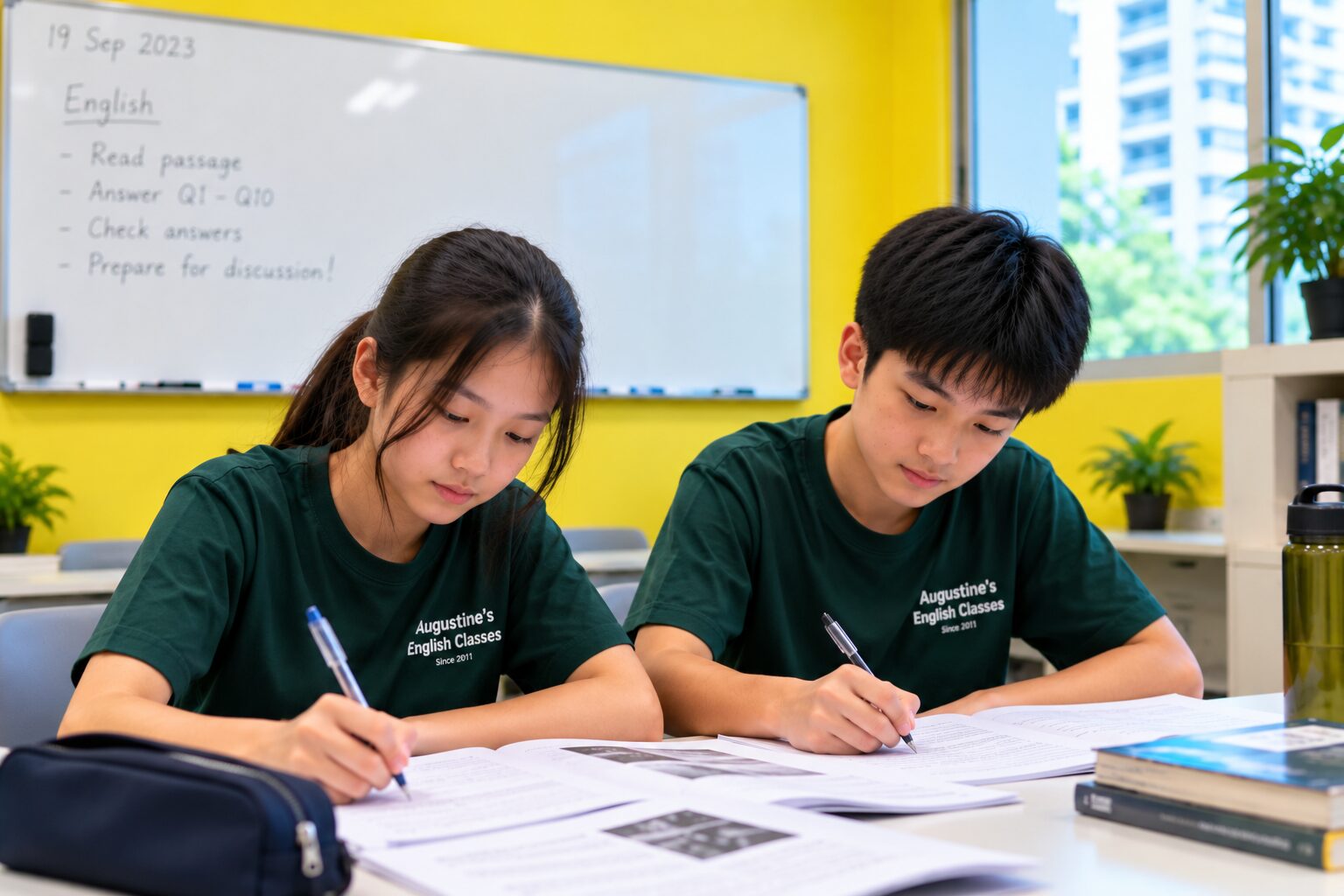
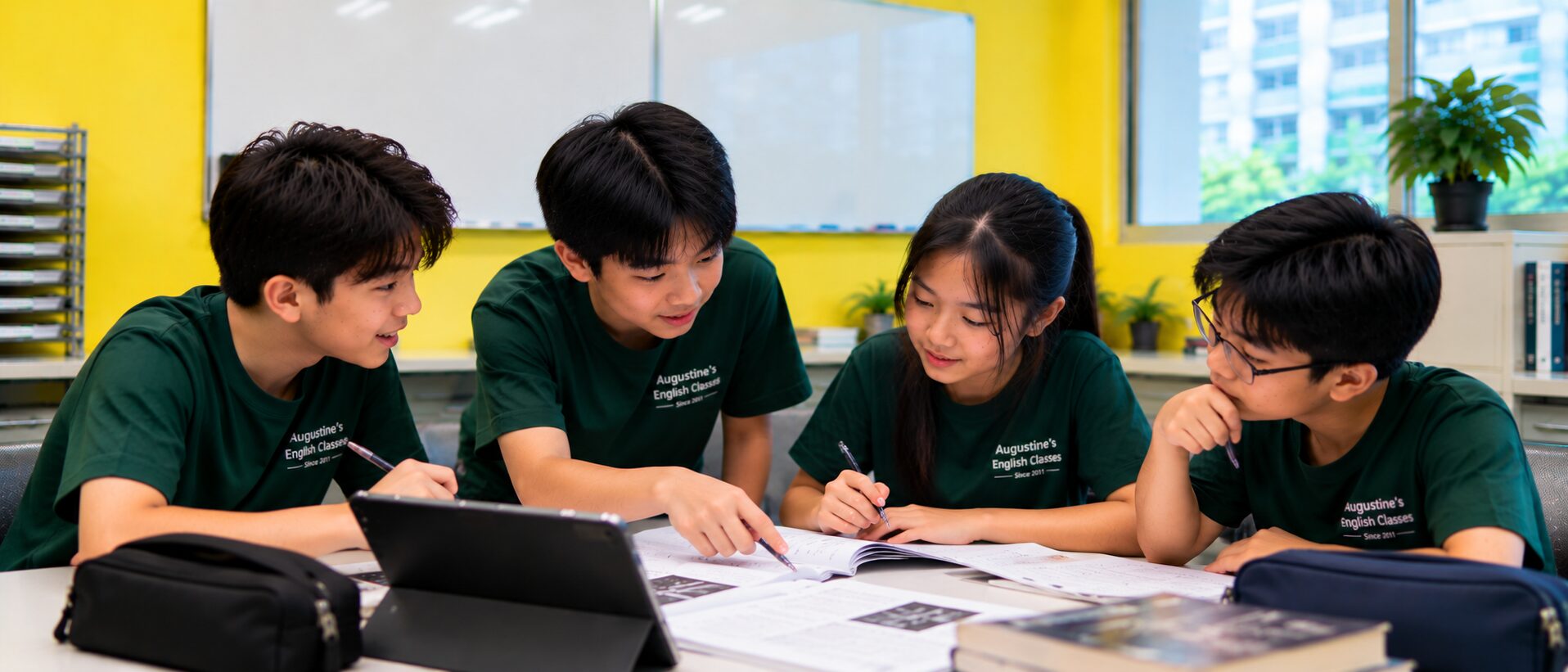
Best Secondary 1 English Tuition In Singapore
Improve By 2 Grades Within 6 Months
Secondary 1 is where the jump from primary to secondary English hits hardest. The standard rises, questions stop being straightforward, and most students realise they never had a real method for writing or comprehension. Getting this stage right comes down to training, understanding how marks are actually awarded and building the habits that earn them.
Our Secondary 1 English tuition Singapore programme treats English as a paper with fixed demands. Students learn to structure writing, unpack comprehension questions, annotate passages with purpose, and apply grammar accurately, giving them a clear method from the start of secondary school. It's one part of a wider progression across levels at our secondary English tuition centre, built so students don't have to relearn a new method every year.
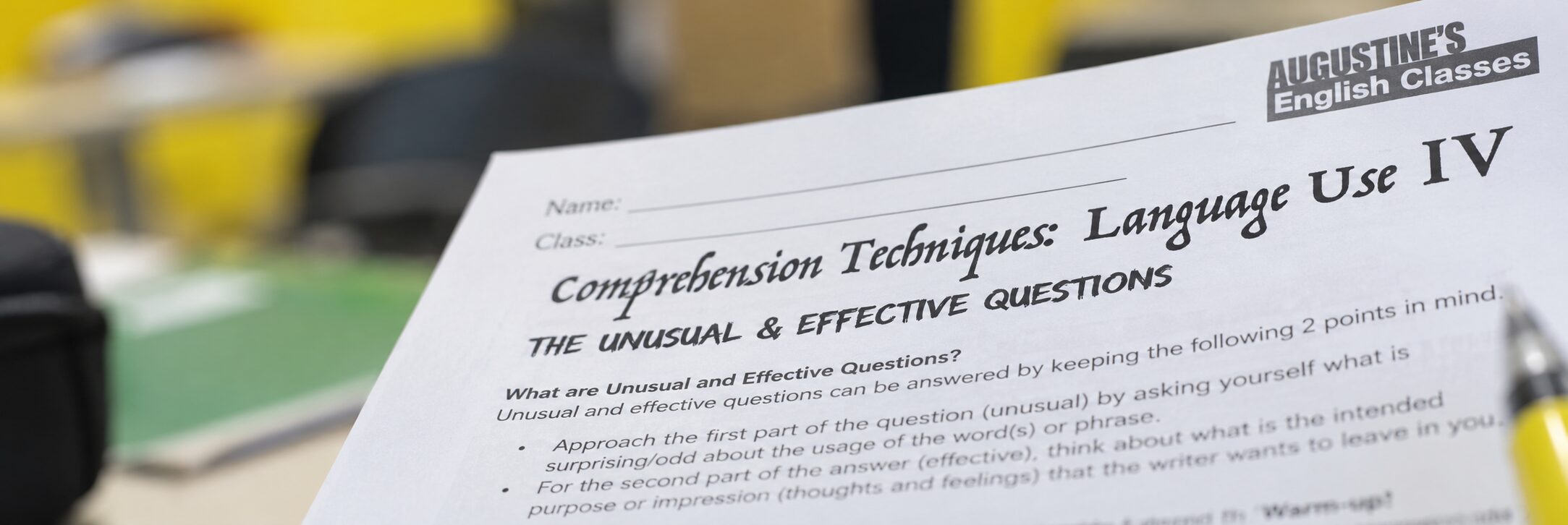
Our System For Secondary 1 English Tuition
Primary school rewards creativity and storytelling. Secondary school rewards control, precision, and answers built to a mark scheme. Students who make that shift early carry strong habits through to O-Level.
After more than 20 years of teaching English, the method has stayed the same. Students see exactly why marks are lost and what a correct answer looks like, then repeat it until it becomes consistent. That's the system behind our secondary school English tuition.
Many Secondary 1 students struggle to answer questions because they don't have a clear structure for thinking through the question and organising a response. They may understand parts of the text, but they don't know how to convert that understanding into an answer that earns marks.
Issues That Secondary 1 Students Face
1. Lack of structure in answering questions
Many Secondary 1 students struggle to answer questions because they do not have a clear structure for thinking through the question and organising the answer. They may understand parts of the text, but they do not know how to convert that understanding into a response that earns marks.
2. Belief that they are not good at English
A common mistake is that students think they have no talent for English. This usually happens after repeated failure without clear correction. When feedback is limited to phrases such as “be more precise” or “elaborate more”, students are told what is missing but not taught how to fix it.
3. Weak organisation, precision, and inference
Students also struggle with organisation of ideas, precision in answering, and inference. In comprehension, they often copy lines without identifying what the question is testing. In writing, they produce content without direction, which leads to weak development and poor control. These are not random weaknesses. They come from the absence of a method.
How Our System Correct These Problems
1. Clear answering frameworks for comprehension
In class, students are trained to work with clear answering frameworks. For comprehension, they are taught how to identify command words, locate the relevant lines, interpret the question requirement, and shape the answer according to the marks available. This reduces vague answering and improves precision.
2. Fixed planning structures for writing
For writing, students are taught fixed planning structures before they begin drafting. Most students lose marks because they start writing too early without controlling content, sequence, or purpose. This is corrected by teaching them how to generate relevant points, organise them logically, and develop them with enough explanation and detail to secure stronger content and language marks.
3. Structured training in grammar and vocabulary
For grammar and vocabulary, students are not given random lists to memorise. They are taught how grammatical rules function inside sentences and how vocabulary changes tone, clarity, and accuracy. The outcome is that students begin to write and answer with control instead of relying on instinct.
Statistics That Make Augustine Worth It
Why Parents Choose Augustine English Classes
01
1,800 students personally instructed
Augustine has directly instructed more than 1,800 students preparing for PSLE, O-Level, and A-Level English since 2004. Every session is conducted by him personally, without rotating instructors, which guarantees uniform feedback and teaching methodology.
02
82% of students improved at least 2 grades within 6 to 9 months
Within 6 to 9 months, 82% of students progress by a minimum of 2 grades. This result comes not from increased practice volume, but from systematic correction and standardised techniques that match actual marking criteria.
03
More than two decades of English teaching experience
With over 20 years teaching English and a Master's degree from NUS, Augustine's approach has gained recognition from institutions including Victoria School and Hwa Chong Institution, where he has led student workshops.
"Most tuition centres equate effort with the volume of practice assigned. That approach is insufficient. Practice yields results only when students understand what to identify, what to eliminate, and how to modify their responses to satisfy marking standards. That represents the training delivered in class."
What Is Covered In Our Secondary 1 English Tuition Singapore Programme
Building the Foundations for the O-Level English Paper
The O-Level English paper rewards precision. A student can write fluently and still score in the C5–B3 range if their answers are not aligned with how marks are awarded.
In our secondary English tuition, students first learn how each paper is marked, such as what assessors look for, where marks are commonly lost, and which question types repeat year after year. For students coming from our Sec 2 English tuition Singapore programme, this marking-scheme approach will already feel familiar, since it's the same lens applied at Sec 3, just against a higher bar.
Paper 1
Situational Writing and Continuous Writing


Students train on the exact conventions each situational writing type demands, plus clean paragraph structure for continuous writing.
- Format accuracy training for emails, reports, and articles
- Planning as a fixed first step, before writing starts
- Paragraph-level control: topic sentences, supporting detail, staying on task
- Foundational narrative and expository writing, ahead of the argumentative structures introduced later
Paper 2
Comprehension and Language Use

Primary comprehension rewards finding the right lines. Sec 1 starts rewarding interpretation, and that shift catches most students off guard.
- Question unpacking, so students know what type of answer is expected
- Inference introduced as its own skill, beyond copying text
- Literal and inferential questions trained separately
- Early, gradual exposure to O-Level-style analytical questions
Paper 3
Grammar and Vocabulary Mastery

Grammar and vocabulary accuracy start with listening closely, not just reading or writing.
- Note-taking focused on exact phrasing and key details
- Listening for detail, since missed words are where errors start
- Summary-style listening to reinforce concise, accurate word choice
- Vocabulary and grammar reinforced through listening, reading, and writing together
Schedule For Our Secondary 1 English Tuition in Singapore
| Secondary 1 | Monday | 5.30 PM to 7.30 PM |
|---|---|---|
| Wednesday | 5.30 PM to 7.30 PM | |
| Friday | 5.30 PM to 7.30 PM |
Consistent training is necessary because progress in English relies on ongoing correction and deliberate practice. Students require sufficient contact hours to implement a technique, undergo correction, and repeat the framework until it becomes automatic. The timetable is structured to provide that continuity.

Expected Outcome from Our Secondary 1 English Tuition Programme
Students apply fixed frameworks for comprehension, writing, and grammar so their answers consistently align with how marks are awarded across Paper 1 and Paper 2.

Fee Structure for Secondary 1 English Tuition Programme
Cost Per Session
$100 for a 2-hour session
Each session lasts 2 hours and accommodates a maximum of 8 students. This arrangement permits detailed correction and continuous monitoring of each student's development. Augustine personally teaches every session, providing direct instruction and focused feedback throughout the term.

Payment on Term Basis
Payment Structure
Fees at Augustine's are charged per term rather than per session. A term represents a block of sessions corresponding to the Singapore academic calendar, usually comprising 10 to 13 sessions.
Term Calendar and Pricing
Term | Dates | Lessons | Secondary English Tuition Fee |
Term 1 | 24 Nov 2025 – 22 Feb 2026 | 13 | $1,300 |
Term 2 | 23 Feb – 17 May 2026 | 12 | $1,200 |
Term 3 | 1 Jun – 16 Aug 2026 | 11 | $1,100 |
Term 4 | 17 Aug – 25 Oct 2026 | 10 | $1,000 |
The Augustine Difference in Secondary 1 English Learning
How can you confirm that learning has occurred? You can ascertain it when you can effectively teach it to others.
Enrolling in our good English tuition centre for primary not only helps students showcase their comprehension of techniques and question formats during their exercises, they are also encouraged to explain these concepts to their classmates during the lessons.
In addition to learning from meticulously designed materials within a supportive atmosphere, your child will leave our classroom with a sense of empowerment. These are some of the factors that distinguish us as the best secondary English tuition centre in Singapore!

Single Teacher Model
Every class personally taught by Teacher Augustine — no rotating tutors.

In-house Materials
Updated each year against MOE assessment formats and recent PSLE papers.

Question-Trend Drilling
Lessons built around recurring PSLE question patterns identified through paper analysis.

Real-World Themes
Composition and oral practice grounded in current events, building stronger logical reasoning.

Class Size of 8
Capped enrolment so every student receives direct correction and feedback in each lesson.

Progress Reporting
Periodic written updates on each student's specific weaknesses and improvement areas.


About the Secondary 1 English Tuition Instructor
Teacher Augustine founded Augustine's English Classes, holds a Master's degree from NUS, and has taught English at primary, secondary, and junior college levels for more than 20 years. Since 2004, he has personally trained over 1,800 students for PSLE, O-Level, and A-Level English, with his comprehension and composition methods recognised by Victoria School and Hwa Chong Institution.
Augustine teaches every class himself, so he can catch weaknesses early and keep corrections consistent all year. For Sec 1 students, this early consistency is what keeps small gaps from growing.
Student Success Story: From Failing English to A1, Developing Structure and Exam Strategy
The habits that decide O-Level performance are usually set early. One student enrolled with us after an F9 in English, with teachers flagging vague answers and poorly organised essays. What helped him turn things around was a clear structure, the same foundation Sec 1 students build from day one and carry through to our Sec 3 English tuition Singapore programme closer to their O-Level year.
During lessons, we trained him with fixed, reproducible methods:
- Defined composition frameworks for planning and developing essays
- Standardised comprehension techniques to pinpoint question demands and construct answers
- Sequential approaches to tackle inferential questions
- Once he grasped how to navigate the subject, transformation followed.
Throughout the year:
- His responses became more organised and deliberate
- He transitioned from writing aimlessly to writing with clear purpose
- His comprehension accuracy showed substantial improvement
- By the conclusion of Secondary 4, he obtained an A1 in O-Level English.
Easy Registration for Our Secondary English 1 Programme


We’ll contact you to review your child’s learning needs properly.

We’ll place you in the suitable programme for your trial lesson.
Trusted by Parents

My daughter started attending Augustine's English Classes in January of this year. I'm glad that her English has improved significantly, especially her composition. Her confidence in learning English has also increased. Teacher Augustine has a unique way of teaching and encouraging students. My daughter is very motivated and enjoys his classes. The classroom environment is comfortable, and there is a little entertainment before class for students to decompress. I am extremely pleased with my decision to choose this tuition centre for my daughter's education.

C M Lim
Mr Augustine is a passionate teacher who teaches from the heart and strives to help students reach their full potential. His lessons are fun and interesting. He tries to keep his classes small so that he attend to each and every student's query. My son really enjoys his lessons and look forward to attending his classes. Most of all I can see great improvement in his grades.
Joanne Lin
Augustine makes his lessons fun and enjoyable he gives us really great exam tips and managed to pull up my English grades
Xavier Lim
I feel very blessed to have found Augustine's English tuition centre.
The enrolment is fuss free. There is no deposit or complicated terms and conditions to confuse busy parents like me.
My gal has been with this centre since P6 in 2019 till now. She is more than willing to travel from south all the way to the East to attend Augustine's English classes and without fail. She finds him very engaging and motivating enough to keep her interest in learning English going and to the extent that she fills up her bookshelf with English storybooks, using her own pocket money. She has smoothly progressed to sec 4 now, with consistent good score in English. If my gal manages to go to JC next year and if there is still English tuition class open for JC level, she will definitely continue her tuition in this centre! Keep going, Augustine!
Elise Teo
My children’s grades improved significantly due to the fun and engaging teachings. Augustine is encouraging and my children look forward to their classes every time. Highly recommended.
Angelene Tan


FAQ
Secondary 1 is where many students first encounter a real jump in English difficulty. The question types become less direct, and the standard becomes more demanding. Starting early allows weak answering habits to be corrected before they become fixed and carry forward into upper secondary years.
The programme focuses on writing structure, comprehension precision, grammar accuracy, vocabulary use, and clear answering techniques. Students are taught how to plan before writing, annotate passages properly, identify what each question is testing, and respond with the control needed to secure marks.
Students are not simply given practice. In class, they are taught how answers are constructed and how marks are awarded. Teaching begins with method, not volume. Students learn fixed frameworks for comprehension, writing, and grammar so they can apply the same technique across different question types.
Classes are capped at a maximum of 8 students. This allows for close correction, consistent tracking of individual progress, and targeted feedback. Every lesson is taught personally by Augustine, not rotating tutors or assistant teachers.
The fee is $100 per 2-hour lesson. Fees are collected termly, with each term spanning 10 to 13 lessons depending on the school calendar. Term fees range from $1,100 to $1,300. There is no registration fee, material fee, or deposit.

Ready to kickstart your
child’s journey to success?
Would You Like Your Child To Be Our Next Success Story?
Simply fill in your particulars and we will contact you to confirm the FREE Trial Class!
As featured on:


